Mumbai began as seven separate islands. One British king received them as a wedding gift. Today, that same stretch of coastline is home to the world’s most expensive private residence, the busiest urban train network on Earth, and a neighbourhood that generates $1 billion in annual revenue from 2.39 square kilometres of land.
There are facts about Mumbai that surprise even people who’ve visited before. This guide covers 25 of them: the history, the records, the landmarks, and the everyday wonders that make this city unlike anywhere else on the planet. Read these before your trip and you’ll arrive knowing what you’re actually looking at.
What is Mumbai Known For?
Mumbai is India’s financial capital and its entertainment heartland. The Bombay Stock Exchange, the National Stock Exchange, and the Reserve Bank of India all sit within the city. So does the Hindi film industry, Bollywood, which produces over 1,000 films per year, more than Hollywood.
The city is also famous for its street food culture, its three UNESCO World Heritage Sites, and Dharavi, a densely packed community in the heart of the city that runs a remarkably productive economy. And beneath all of it, Mumbai’s geography is genuinely unusual: it’s a peninsula built from seven reclaimed islands, surrounded on three sides by the Arabian Sea.
Historical Facts About Mumbai
Many of the city’s most surprising historical facts explain how a group of small coastal islands became India’s financial and cultural capital. Let’s learn about them-
Mumbai Was Once Seven Islands
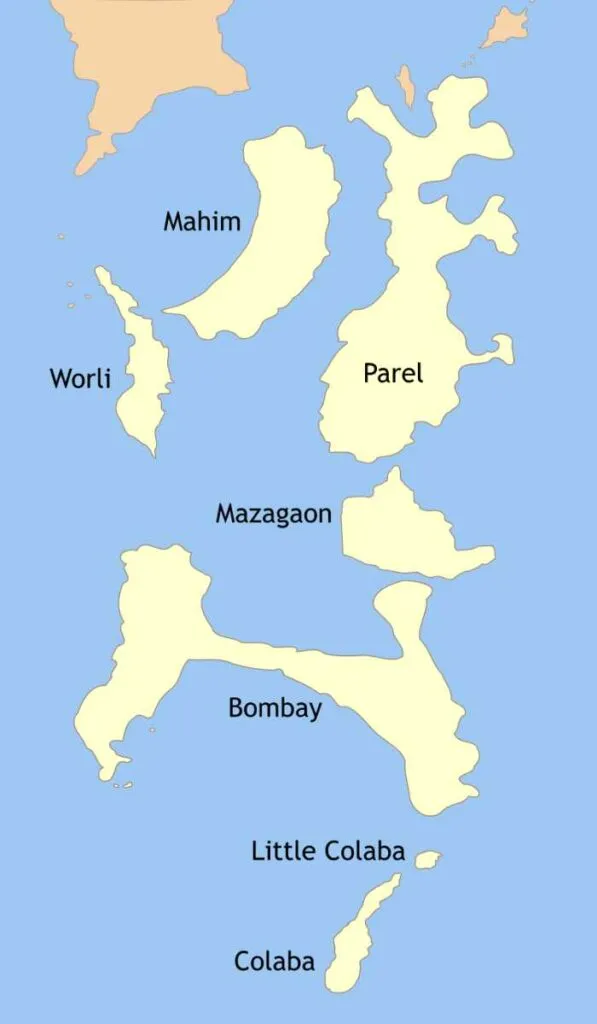
Before it became one of the world’s great cities, Mumbai was a loose cluster of seven fishing islands scattered across the Arabian Sea. Those seven islands (the Isle of Bombay, Colaba, Old Woman’s Island (Little Colaba), Mahim, Mazagaon, Parel, and Worli) were home to Koli fishing communities who had lived there for centuries.
Joining them took the British more than 150 years. The process started in the 1700s and wasn’t complete until the mid-1800s, a slow reshaping of the coastline through drainage, reclamation, and the construction of causeways. The peninsula you walk across today is the result of that long, painstaking work.
Bom Baim, Bombay, Mumbai: How the City Got Its Name
The city has held three different names, each one a chapter in its history.
The Portuguese arrived in the 1530s and saw a natural deep-water bay. They called it Bom Baim, meaning “good little bay.” In 1661, Portugal gave the islands to the British Crown as part of the royal dowry when Princess Catherine of Braganza married King Charles II. The British renamed it Bombay.
In 1995, the Indian government officially changed the name to Mumbai. The name comes from Mumba Devi, the patron goddess of the Koli fishing community who were the islands’ original inhabitants. “Mumba” is the goddess’s name; “aai” means mother in Marathi. The city’s name, in other words, has always honoured the people who were there first.
The Koli Fishermen: Mumbai’s Original Inhabitants
Long before the Portuguese or the British, the Koli community fished these waters. Their villages dotted the seven islands, and their patron goddess gave the city the name it carries today.
What’s remarkable is that Koli fishing villages still exist in modern Mumbai. Versova, Worli, and Colaba all have active Koli communities, small pockets of traditional coastal life surrounded by one of the world’s most dynamic cities. If you look carefully during a Mumbai city tour, you’ll see the fishing boats still heading out at dawn.
Mumbai Was Given to Britain as a Royal Wedding Gift
In 1661, Portugal handed the seven islands of Bombay to the British Crown as part of a royal dowry. King Charles II then leased the entire territory to the East India Company for £10 per year. That transfer, from a Portuguese wedding gift to a commercial lease, set in motion everything that followed: the growth of the port, the building of the railways, the influx of merchants and migrants, and eventually the rise of a city that would become India’s economic engine. Few cities can trace their modern existence to a single transaction quite so precisely.
Mumbai’s “City of Firsts”
Mumbai doesn’t just hold records today. It has been setting them since the 1800s.
India’s First Train Ran from Mumbai
On 16 April 1853, India’s first passenger train left Bori Bunder station (now Chhatrapati Shivaji Maharaj Terminus) and travelled 34 kilometres to Thane. Twenty-one cannons fired in salute.
That single track has since grown into the busiest urban rail network on Earth. Mumbai’s local trains carry over 2 billion passengers per year across three main lines, which is more than the entire population of China boarding trains annually. Rush-hour carriages carry up to 16 people per square metre. It’s not comfortable, but it is one of the most genuinely Mumbaikar experiences you can have.
India’s First Bus Service Started Here
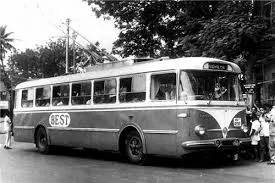
On 15 July 1926, India’s first public bus service ran between Afghan Church and Crawford Market in Mumbai. Today, BEST (Brihanmumbai Electric Supply and Transport) buses carry over 5 million passengers daily across the city.
India’s First Five-Star Hotel
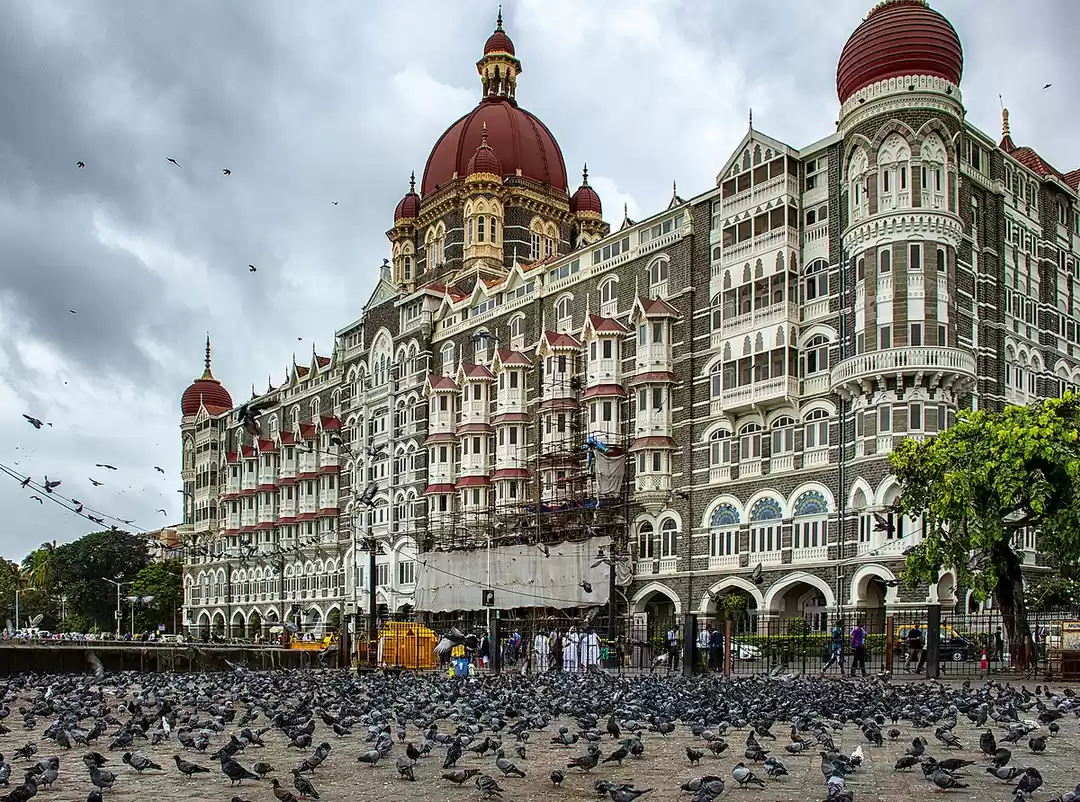
The Taj Mahal Palace in Colaba opened on 16 December 1903, becoming India’s first five-star hotel, commissioned by Jamsetji Tata, the founder of the Tata Group. It was the first hotel in India to offer electricity, Turkish baths, and German elevators to its guests.
More than 120 years later, it still stands at the waterfront in Colaba, directly behind the Gateway of India. It’s hard to miss on any Mumbai City Sightseeing Tour.
India’s First Car Owner Lived in Mumbai
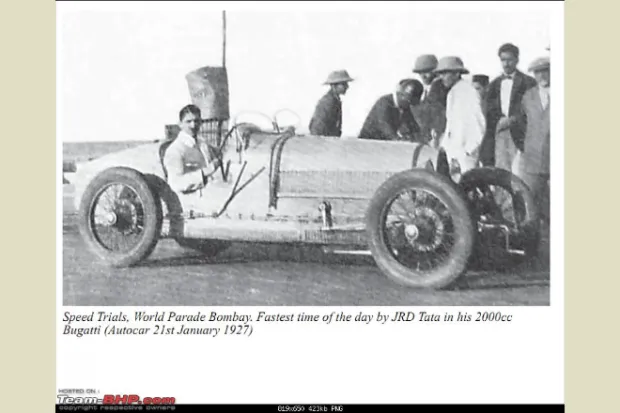
The same Jamsetji Tata who built that hotel was also the first person in India to own a car. He purchased it in 1901.
The First Railway Line Built by a Woman
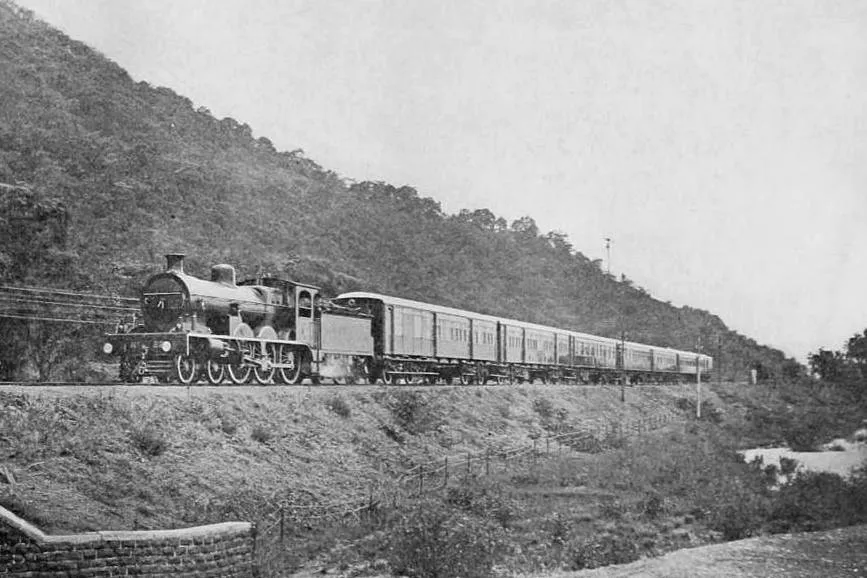
In 1863, Alice Tredwell, an English photographer and railway contractor, oversaw the construction of the Mumbai–Pune railway line. She was the wife of Solomon Tredwell, the named contractor, but she managed the construction operation herself. She was the first woman to work in India’s railway construction industry, a fact that rarely gets the attention it deserves.
Famous Mumbai Landmarks You Have to See
Mumbai is filled with landmarks that reflect the city’s colonial history, coastal setting, and cultural identity. From historic monuments to famous waterfront views, these places are essential stops for first-time visitors exploring the city.
The Gateway of India

Built in 1924 to commemorate the visit of King George V and Queen Mary, the Gateway of India stands at the waterfront in Colaba, constructed from yellow basalt stone. It’s the most photographed landmark in Mumbai, and for good reason.
What most visitors don’t know is the historical weight the arch carries. When India gained independence in 1947, the last British troops left the country by marching through the Gateway of India and boarding a ship in February 1948. The monument built to celebrate a colonial visit became the exit point for colonial rule itself.
From the Gateway, you can board a ferry to Elephanta Island, a short ride across Mumbai Harbour to one of India’s most spectacular UNESCO World Heritage Sites.
Marine Drive: The Queen’s Necklace
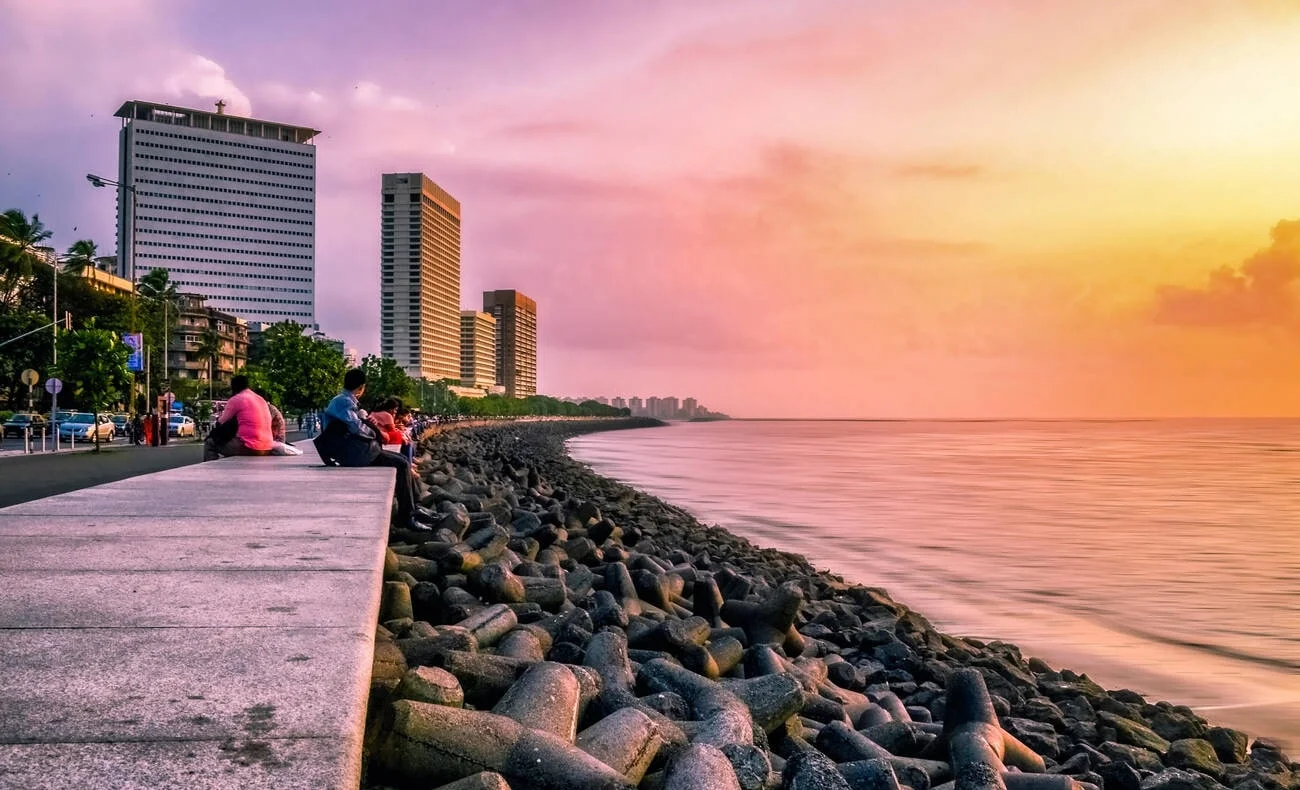
Marine Drive is a 3.6-kilometre arc of reclaimed land running along the eastern edge of Back Bay, connecting Nariman Point in the south to Malabar Hill in the north. At street level, it’s a promenade lined with Art Deco apartment buildings and palm trees, facing the open Arabian Sea.
At night, the streetlights curve in an unbroken line around the bay. Seen from above (or from Malabar Hill), they look exactly like a string of pearls draped along the water’s edge. Mumbaikars have called it the Queen’s Necklace for decades.
It’s free to visit, open around the clock, and one of the rare places in Mumbai where the city actually slows down. Go at sunset.
Chhatrapati Shivaji Maharaj Terminus: A UNESCO World Heritage Site
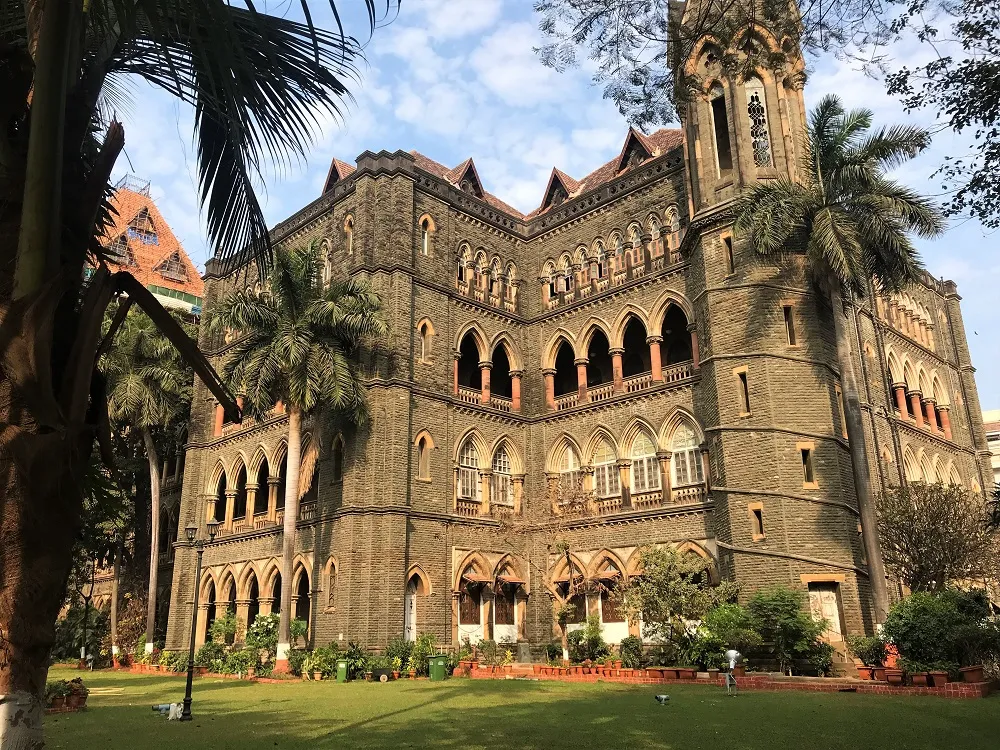
Built in 1887 by British architect Frederick William Stevens, this railway terminus is one of the finest examples of Victorian Gothic architecture anywhere in the world. The exterior is an extraordinary composition of domes, turrets, pointed arches, and gargoyles, a building that looks more like a cathedral than a train station.
UNESCO listed it in 2004. Over 3 million commuters pass through it every single day, making it one of the world’s busiest functioning heritage buildings. It was originally called Victoria Terminus; the name was changed in 1996 to honour the Maratha warrior king Chhatrapati Shivaji Maharaj.
Bollywood Facts About Mumbai
Film City: The Heart of Bollywood
Bollywood produces over 1,000 films per year, more than Hollywood has ever managed in a single calendar year. The hub of this industry is Dadasaheb Phalke Chitranagari, known as Film City, a 520-acre studio complex in Goregaon East that houses dozens of permanent sets, outdoor locations, and production facilities.
Here’s the part that genuinely surprises people: Film City shares a boundary with Sanjay Gandhi National Park. Leopards have reportedly wandered onto film sets during shoots. A crew filming a Mumbai street scene can look up and see jungle. On a Bollywood Film City Tour, you get the industry and, occasionally, a reminder that the city hasn’t fully won the argument with the forest.
Mumbai Is India’s Financial Capital
Mumbai generates approximately 6.16% of India’s total GDP. The Reserve Bank of India, the Bombay Stock Exchange (the oldest in Asia, founded in 1875), and the National Stock Exchange all operate here. The city is home to more billionaires and millionaires than any other city in India, and it ranks among the world’s Alpha cities, the handful of metropolises that serve as primary nodes in the global economic network.
Food Facts About Mumbai
The World’s Greatest Street Food City
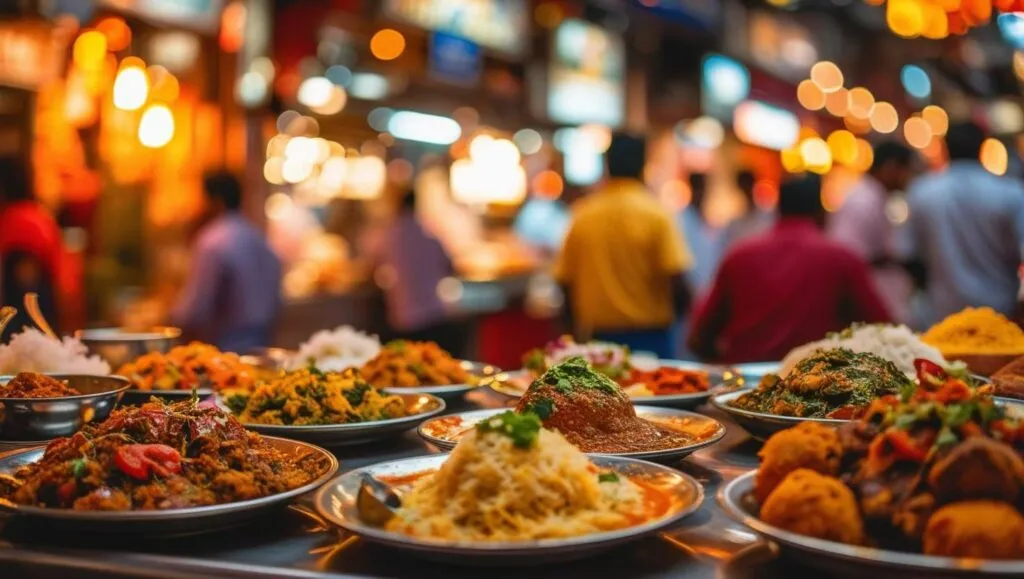
Street food in Mumbai isn’t a tourist attraction. It’s how the city eats. Office workers, students, and taxi drivers all share the same food stalls, and the best meal in the city often costs less than ₹50.
The essentials: vada pav is Mumbai’s own creation, a spiced potato patty in a soft bun eaten standing at a street corner. Pav bhaji is a thick vegetable curry served with buttered bread rolls. Pani puri are hollow crisp shells filled with spiced water that you eat in a single bite. Bhel puri and keema pav complete the list of things you should eat before you leave.
A Mumbai Food Tour with a local guide is the best way to find the stalls that Mumbaikars actually go to, not the ones near the tourist sites.
The Dabbawalas: 200,000 Lunches everyday
Since 1890, Mumbai’s dabbawalas have collected home-cooked lunches from residential suburbs every morning and delivered them to offices across the city, then collected the empty tiffin boxes and returned them home by afternoon. They do this for over 200,000 people every single day.
Their accuracy rate is 99.97%. Forbes gave them a Six Sigma quality rating, the same standard applied to Motorola and General Electric. Harvard Business School has published case studies on their logistics system. They use no computers, no GPS, and no apps. Their coding system is a combination of colours, symbols, and numbers that has worked without interruption for more than 130 years. There are approximately 5,000 dabbawalas operating today, divided into teams of 25.
Urban Wonders: Things That Make Mumbai Unique
The World’s Most Expensive House
Antilia, on Altamount Road in South Mumbai (a street residents call Billionaires’ Row), is the world’s most expensive private residence. The 27-floor, 400,000-square-foot tower belongs to Mukesh Ambani, chairman of Reliance Industries. It has a 168-car garage, nine high-speed lifts, a 50-seat private cinema, a spa, a snow room where chilled air is pumped in year-round, and a ballroom. The building is valued at between $1 and $2 billion.
A few kilometres away, some of Mumbai’s most densely populated neighbourhoods stretch out across the same city. That contrast between extraordinary wealth and ordinary life pressing up against each other is one of the things that makes Mumbai impossible to look away from.
The World’s Largest Open-Air Laundry
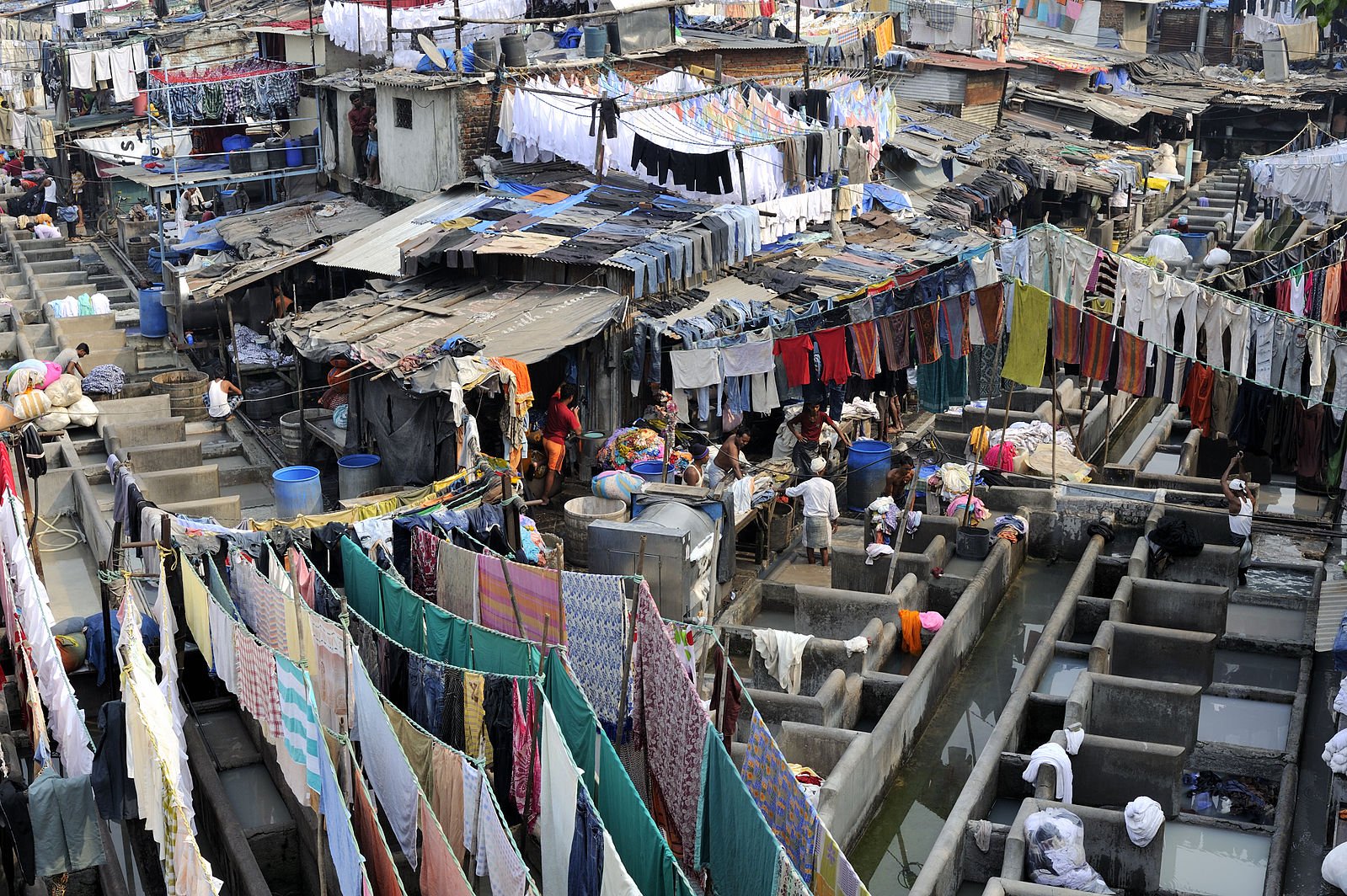
Mahalaxmi Dhobi Ghat has been operating continuously since the 1890s. It has 700 stone washing platforms and employs over 8,000 dhobis, laundrymen who process the clothes, linens, and uniforms of Mumbai’s hotels, hospitals, and households.
In 2011, it earned a Guinness World Record for the most people hand-washing clothes simultaneously at a single location. It’s still fully operational. You can see it from the railway bridge near Mahalaxmi station, a huge outdoor washing operation that looks almost surreal from above.
The Bandra-Worli Sea Link
The Rajiv Gandhi Sea Link connects the western suburb of Bandra to Worli across the open Arabian Sea. The bridge is 5.6 kilometres long. Builders used 90,000 tonnes of cement in its construction, and the total length of steel wire equals the circumference of the Earth: 40,075 kilometres.
Before the bridge opened in 2009, the drive between Bandra and Worli could take 45 to 60 minutes in traffic. The Sea Link cuts it to six to eight minutes. It was India’s first cable-stayed bridge built over open sea.
The Busiest Train Network on Earth
Mumbai’s local train network runs across three main lines (Western, Central, and Harbour) from roughly 4am to 1am every day. It carries over 2 billion passengers per year. During rush hour, carriages operate at around 16 people per square metre; the design capacity is less than half that figure.
For international visitors, riding the local train is one of the most authentic things you can do in Mumbai. It’s how the city moves. A guide from Magical Mumbai Tours can show you which line, which carriage, and which direction, so you experience it rather than survive it.
Surprising Facts About Mumbai You Probably Didn’t Know
Up to 130,000 Flamingos Visit Mumbai Every Winter
Every year from October to March, flamingos migrate to Mumbai. At the peak of the season (usually November to February), up to 130,000 birds gather on the mudflats at Sewri and Bhandup in the eastern part of the city. The mudflats turn pink.
Nobody has fully explained why flamingos choose this industrial corner of Mumbai. The mudflats offer algae and brine shrimp, but the birds travel from as far as the Rann of Kutch and beyond to get here. Sewri is not a typical tourist area. It’s surrounded by port infrastructure and industrial facilities, which makes the flamingo colony feel more like a discovery than a scheduled attraction. Go early in the morning when the light is soft and the birds are feeding.
Dharavi: A $1 Billion Economy Hidden in Plain Sight
Dharavi covers 2.39 square kilometres in the heart of Mumbai. Inside that space, an estimated 15,000 small businesses operate across industries including recycling, leather goods, pottery, embroidery, food production, and garment manufacturing. The area’s annual economic output is estimated at $1 billion.
Most people arrive in Dharavi with one image in their head. Most leave with a completely different one. Magical Mumbai Tours guides enter through the industrial quarter first, where you’ll see leather tanneries, pottery kilns, and recycling operations that process a significant share of Mumbai’s waste. The pottery quarter alone produces tens of thousands of clay pots sold across the city every year. Many of the workshops have been running for two or three generations, passed from parent to child inside the same few square metres.
A Dharavi tour with a trained, community-conscious guide gives you the actual picture: the industry, the skill, the history, rather than the surface impression.
Mumbai’s Nobel Laureates
Rudyard Kipling was born in Mumbai on 30 December 1865. The author of The Jungle Book won the Nobel Prize in Literature in 1907. His birthplace still stands on the campus of the J.J. School of Art in South Mumbai, where it served as the Dean’s residence for many years.
Abhijit Banerjee, the MIT economist and co-winner of the 2019 Nobel Prize in Economic Sciences, was also born in Mumbai. A city that builds Bollywood blockbusters and runs a billion-dollar street economy has also produced minds that reshaped how the world thinks about poverty and development.
Sanjay Gandhi National Park: A Jungle Inside the City

Sanjay Gandhi National Park covers 104 square kilometres of protected forest, entirely within Mumbai’s city limits. It’s home to leopards, deer, crocodiles, monkeys, and over 250 species of birds. The leopards are not a rumour; they occasionally move into residential areas at the park’s edges.
Inside the park, carved into basalt cliffs that are remnants of ancient volcanic activity, are the Kanheri Caves, a network of over 100 Buddhist rock-cut structures dating from the 1st century BCE to the 10th century CE. Monks once lived, meditated, and studied here. The carvings and inscriptions still survive. A Kanheri Caves tour takes you through the park and into the caves, a journey that starts in the city and ends somewhere that feels several centuries removed from it.
Ready to Experience Mumbai for Yourself?
Reading about Mumbai is one thing. Standing in it is another.
The Gateway of India looks different when a guide explains what happened there in 1948. Walking through Dharavi’s pottery quarter with someone who grew up nearby changes how you see the place entirely. Watch the dabbawalas do their morning handoff at a local station and the logistics suddenly make sense.
Magical Mumbai Tours has been taking international travellers through this city since 2016, with over 100,000 guests from around the world. We’re rated #1 on TripAdvisor with 900+ reviews and have won the TripAdvisor Excellence Award, and every tour is led by local guides who know Mumbai the way only Mumbaikars do. A portion of every booking goes to Magical Homes, our shelter initiative for Mumbai’s elderly homeless.
FAQs About Mumbai
Q: What is Mumbai famous for?
A: Mumbai is famous for being India’s financial capital, the home of Bollywood, and a city of striking contrasts, from the Gateway of India and three UNESCO World Heritage Sites to Dharavi, one of the world’s most productive urban communities. It’s also known for its street food culture, the Mahalaxmi Dhobi Ghat, the dabbawalas, Marine Drive, and a local train network that carries over 2 billion passengers a year.
Q: How did Mumbai get its name?
A: The name has changed three times. The Portuguese called it Bom Baim (“good little bay”) in the 1530s. The British renamed it Bombay after receiving the islands as a royal dowry in 1661. In 1995, the Indian government changed the name to Mumbai, taken from Mumba Devi, the patron goddess of the Koli fishing community who were the city’s original inhabitants. “Mumba” is the goddess’s name; “aai” means mother in Marathi.
Q: Is Mumbai safe for tourists?
A: Yes. Mumbai is generally safe for international tourists, particularly in areas like Colaba, South Mumbai, Bandra, and around major attractions. Like any large city, standard precautions apply: be aware of your surroundings in crowded areas, keep your belongings close, and use reputable transport. Most visitors find Mumbaikars warm, helpful, and used to hosting international guests. Going with a local guide removes most of the guesswork.
Q: What food is Mumbai known for?
A: Mumbai’s street food is internationally recognised. The city’s signature dishes include vada pav (spiced potato patty in a bun, the original Mumbai burger), pav bhaji (vegetable curry with buttered bread rolls), pani puri, bhel puri, and keema pav. The dabbawala system delivers over 200,000 home-cooked lunches to offices every day, so even the logistics of food here are extraordinary.
Q: How many UNESCO World Heritage Sites does Mumbai have, and what are they?
A: Mumbai has three. The Elephanta Caves on Elephanta Island, dedicated to Lord Shiva, date from the 5th–8th centuries CE and are a short ferry ride from the Gateway of India. Chhatrapati Shivaji Maharaj Terminus, the Victorian Gothic railway station still used by millions of commuters daily, was listed in 2004. The Victorian Gothic and Art Deco Ensembles of Mumbai, a collection of historic buildings in the Fort precinct and the Marine Drive area, were added to the UNESCO list in 2018.
Q: What are some fun facts about Mumbai that most tourists don’t know?
A: A few that tend to surprise people: up to 130,000 flamingos migrate to Mumbai every winter and gather on mudflats in the industrial east of the city. Sanjay Gandhi National Park (104 square kilometres of protected forest with leopards) sits entirely within city limits. The Bandra-Worli Sea Link used enough steel wire to circle the Earth. And Dharavi, often misunderstood, runs an estimated $1 billion in annual economic activity from 2.39 square kilometres.
Q: What’s the best way to explore Mumbai as a visitor?
A: With a local guide. Mumbai is dense, fast-moving, and layered in ways that are genuinely hard to read without context. A guided tour helps you understand what you’re seeing, not just where you are. Magical Mumbai Tours offers city sightseeing, Dharavi, Elephanta Caves, food tours, Bollywood Film City, and more. Call or WhatsApp us on +91 9022801616 and we’ll help you plan the right day for your time in the city.